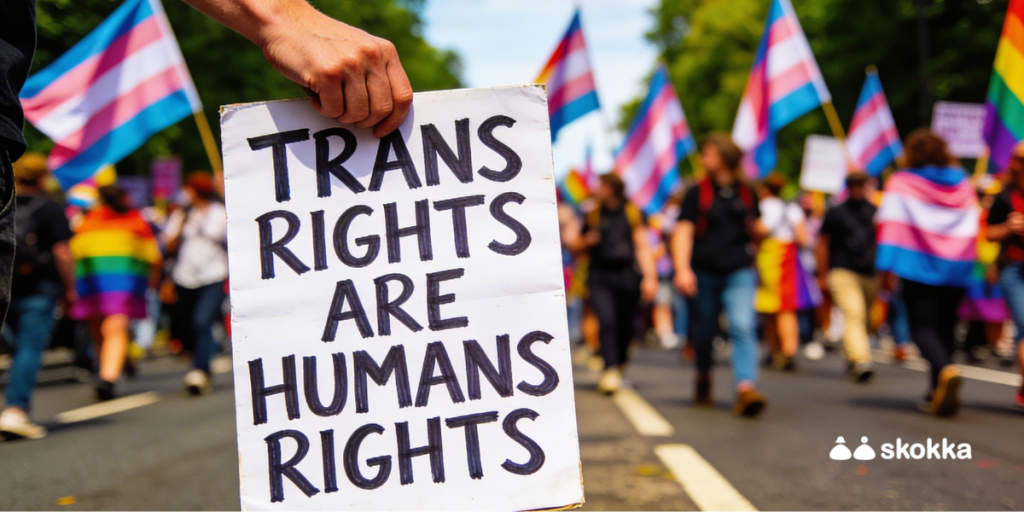
On March 31st, we celebrate the strength, resilience, and diversity of those who challenge gender stereotypes. Trans visibility teaches us that existence is not uniform, that there is no single body, no single story, and no single way to be human.
Living Out Loud: The Meaning of Trans Visibility
Being visible is not simply “being seen”: it is existing authentically in a world that still imposes rigid norms on gender and identity. Trans visibility allows every story, every personal journey, to be acknowledged. Every person who chooses to show themselves to the world contributes to breaking stereotypes and creating spaces of acceptance.
March 31st reminds us that social understanding of this community is still limited. Many people have questions born of curiosity or lack of knowledge, about relationships, identity, and personal experiences.
But what truly matters is understanding that being trans is neither “strange” nor exceptional; it is a natural expression of human diversity.
Each trans person undergoes a completely personal and individual process. Some choose to start hormone treatments or undergo surgeries, while others do not, and all are equally valid in their identity.
The way they dress, express themselves, and live their lives is entirely free, as is the name and pronouns they prefer others to use. Being visible means these realities are understood and respected, not judged or sensationalised.
Visibility can also be an act of courage: it involves exposing oneself to public scrutiny, prejudice, and discrimination. Yet, being visible remains a powerful tool for building a fairer and more inclusive society.
Recognising and Empowering Trans Visibility
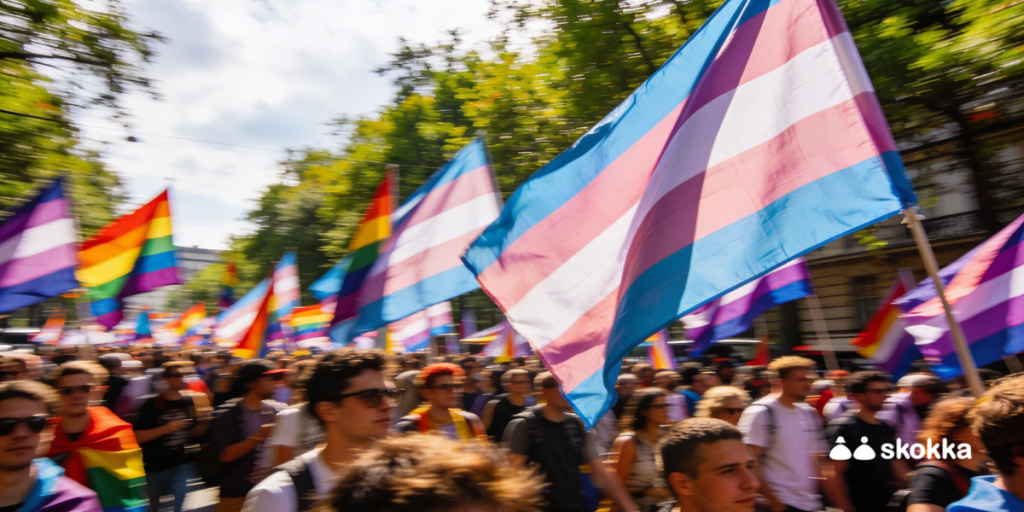
Empowering trans visibility is not just about putting faces on magazine covers or citing statistics. It involves acknowledging the vast diversity of experiences, stories, and personal journeys within the trans community.
One of the clearest lessons from listening to trans voices is that there is no single “path to being trans” or a single moment of transition.
Some people feel their identity from a young age, others discover it in adulthood; some choose to modify aspects of their bodies, others do so at different times, or not at all.
The common thread is not how they live the process, but that their identity is valid and deserves respect.
Platforms like Skokka can play an important role as spaces that normalise diversity and allow trans identities to be represented with dignity and respect, free from sensationalism or exoticisation.
Our platform helps broaden the perspective of those who may not yet have encountered experiences different from their own, promoting deeper and more authentic human connection.
Education as a Tool for Change
Education plays a crucial role in trans visibility. Learning about gender diversity and expression from an early age allows us to create more empathetic and aware societies, where discrimination loses ground.
To better understand, it is useful to distinguish a few key concepts:
- Transgender person: someone who identifies with a gender different from the one assigned at birth. For example, someone born with a penis who identifies as a woman, or someone born with a vagina who identifies as a man.
- Cisgender person: someone whose gender identity aligns with the sex assigned at birth.
- Trans woman / trans man: terms used to refer to those living their female or male identity, regardless of the genitalia they were born with. Beyond definitions, what matters most are the pronouns and name each person chooses to be recognised by.
Education is not just about teaching definitions, it is about opening conversations, listening to experiences, and fostering respect for all ways of being. Education is the key to transforming visibility into genuine inclusion.
There Is No Single Way to Be Human
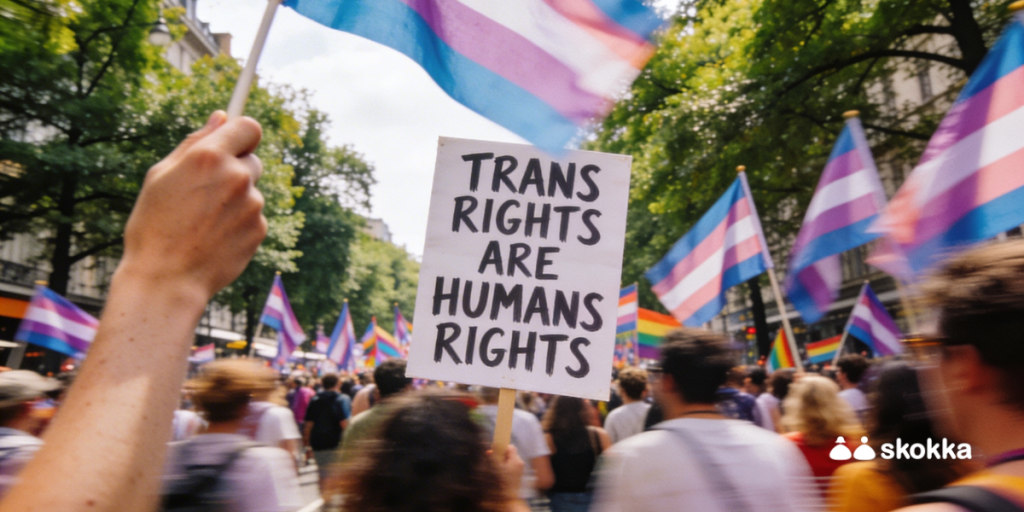
Trans visibility does not merely celebrate the existence of trans and non-binary people; it affirms that every life has value, dignity, and the right to be lived fully.
Being visible means demonstrating and educating about the real diversity of identities that exist within the trans community worldwide.
The International Trans Day of Visibility is a moment to highlight the strength and determination of trans people, as well as to acknowledge the ongoing challenges they face globally, from discrimination in healthcare systems to legal and political barriers that question their right to exist with respect and safety.
The essential message that Skokka seeks to communicate is that there is no single “correct” way to be human. Humanity cannot be reduced to rigid rules, neither bodies, nor identities, nor ways of living.
Trans people have existed across cultures, eras, and regions, each contributing their own story, joy, sorrow, resilience, ways of loving, and ways of fighting.
Visibility also means recognising and amplifying voices that have often been silenced. This includes trans people who may not wish to be in the public eye or who live in hostile environments where visibility can pose real risks.
Even so, many find ways to build community, reaffirm their value, and show the world that being trans is not a stereotype or curiosity, but a complete human experience that deserves to be heard and respected.
And remember: visibility does not automatically eliminate discrimination, but it does help change social narratives and broaden understanding of human identity.