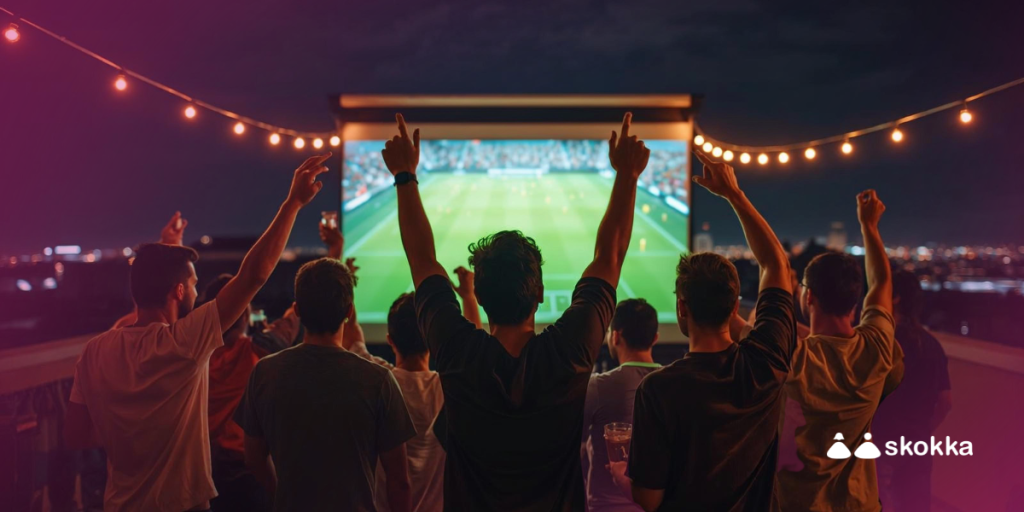
There’s something that happens to cities on match day. Something economists can’t explain but every fan carries deep in their bones.
Bars fill up before midday. The streets smell like what’s coming. The group chat explodes. And your phone, for once, won’t stop buzzing.
What happens inside the stadium is football. What happens outside is a completely different story.
The real match starts at the bar

Nobody, absolutely nobody, waits for the referee to start living match day.
The build-up has its own magic. Ice-cold beers, the eternal debate over whether the manager ruined the lineup, the shirt that hasn’t been washed since the last win, because superstition always beats the washing machine. All of it is part of the same old ritual.
And businesses know it. Bars, restaurants, hotels and the entire entertainment industry adjust their rhythm to the football calendar. When there’s a big match, the city doesn’t walk, it runs.
The final whistle doesn’t exist for everyone
Football moves people. It moves emotions. And it moves the leisure economy in every shape it takes. Adult platforms know what they know: when the city lights up, the action doesn’t stop for anyone.
Match days, long nights, cities on fire. Entertainment doesn’t stop when the final whistle blows. If anything, that’s usually when it really begins.
No boss, no schedule, no asking the scoreboard for permission
There’s something that makes those who advertise on Skokka different: their good day doesn’t depend on the result.
They work when they want, how they want, and where they want. If the city is buzzing, they already knew it before anyone else. If there’s celebration in the streets, they’re part of that urban pulse that turns a match day into something far bigger than ninety minutes of football.
That’s real freedom. Not the kind promised in speeches, the kind lived every single day.
Football brings people together. Entertainment connects them.
Sport has that rare power to make complete strangers embrace in the middle of the street, to make entire cities breathe at the same rhythm, to make a goal in the ninetieth minute change the mood of half the planet.
Skokka understands that pulse. That’s why it’s where the people are in the cities that beat, in the moments that matter, on platforms that respect those who choose to work on their own terms.
Because when it comes down to it, football and Skokka have something in common: neither of them plans the best moments. They just happen.
The ball rolls. The city wakes up. And Skokka sets the pace.