Why does feeling safe still remain a privilege for so many people? Today, we’re talking about sex workers, a reality that has always existed, yet one that is still surrounded by prejudice, violence, and rejection towards those who work within this industry.
On International Sex Workers’ Day, we want to pause for a moment and reflect on everything that is still happening today. This time, through the real story of a Skokka advertiser, answering many of the “whys” that people continue to question.
Why does International Sex Workers’ Day exist?
First, we need to go back to the origins of one of the most important protests in the history of the fight for sex workers’ rights.
On 2nd June 1975, more than one hundred sex workers occupied Saint-Nizier Church in Lyon, France. The protest denounced police violence, institutional persecution, and the vulnerable conditions they faced every single day.
They resisted for eight days until, on 10th June, they were violently removed by security forces.
Their goal was to expose a reality that had remained silenced for years: many sex workers were suffering constant abuse while the State and much of society simply looked the other way.
The courage of these women inspired the creation of the Sex Workers’ Union.
Since then, this date has become a symbol of resistance and visibility. Yet almost fifty years later, many of the issues they fought against still remain unchanged.
That is precisely why International Sex Workers’ Day exists. Because despite decades of fighting, one contradiction continues to hold society back: while desire is consumed every single day, those who work within this industry still face insecurity, discrimination, and violence.
Why did the “Red Umbrella” become the global symbol of sex workers?
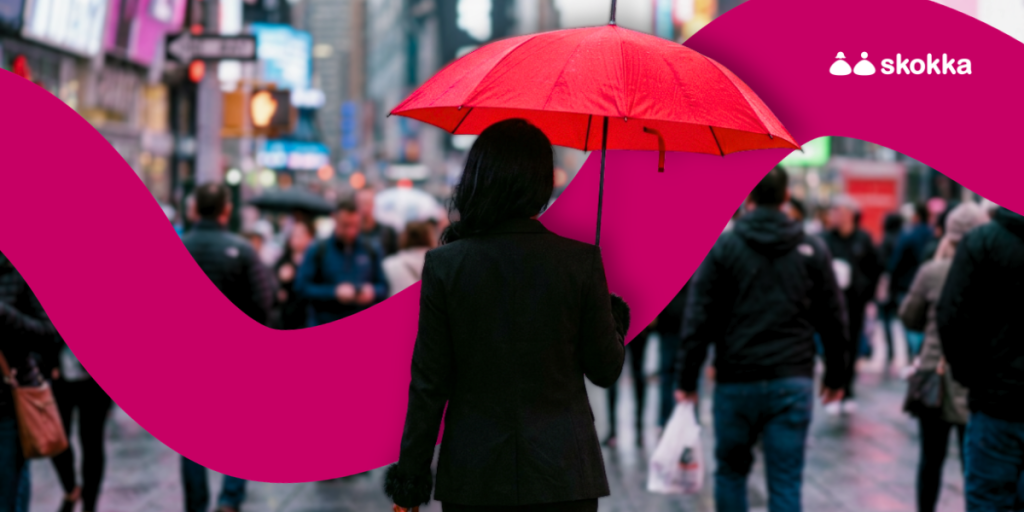
The Red Umbrella movement emerged in 2001 during the Second European Conference on Sex Work in Venice, Italy. During the event, the Committee for the Civil Rights of Prostitutes organised a demonstration in which participants carried red umbrellas both to shield themselves from the rain and to draw public attention to their demands.
With this powerful and symbolic gesture, the red umbrella became one of the most recognised global symbols of sex workers, an emblem of protection, resistance, and solidarity.
The movement uses this symbol to expose social contradictions that are still very much alive today.
The internet transformed part of this reality. Today, many sex workers use digital platforms to manage their profiles, control their schedules, and gain greater autonomy. However, online exposure has also created new risks.
There are now threats such as content leaks, image theft, online harassment, and the spread of personal information. Even artificial intelligence has introduced new forms of abuse through deepfakes and manipulated content created without consent.
This is where platforms like Skokka help transform digital spaces into safer, more organised, and more visible environments, allowing people to manage their activity with greater control and security online.
We created our own Red Umbrella.
Why should sex work be protected?
Protecting sex work does not mean romanticising it. It means understanding that respect and dignity should never depend on someone’s profession.
We are talking about the oldest profession in the world, a reality that, in many places, is still surrounded by moral judgement and scandal.
Millions of people consume these services privately while publicly condemning those who work within the industry. This double standard remains deeply rooted in society and continues to fuel prejudice, stigma, and misinformation.
A disorganised working environment can increase risks. In contrast, having access to online platforms such as Skokka helps reduce certain levels of uncontrolled exposure and encourages more transparent interactions between consenting adults.
Words from a Skokka sex worker

“Many people believe that being a sex worker is degrading or undeserving of respect. I can tell you that simply isn’t true.
Many of these women are the sole providers for their families. They are mothers, daughters, hardworking women, and citizens just like anyone else.
And let’s make one thing very clear: we have always existed.
Speaking from my own experience, I am grateful for my work because it has allowed me to live with dignity. And contrary to what many people believe, many of us are educated, intelligent, speak two or more languages, and carry stories of resilience and overcoming hardship.
But we also cannot ignore those who are still living in precarious conditions, on the streets and in alleyways, vulnerable to violence and abandonment. They too deserve protection, support, and respect.
And speaking of protection, the red umbrella has become a symbol of struggle, unity, dignity, and solidarity for all of us. I am proud to represent Skokka in Brazil because it is a space that seeks to offer visibility, safety, and support to so many women.
Disagreeing with someone’s lifestyle is a right. But respecting other people’s choices and humanity is an obligation.” — Solange, Brand Ambassador for Skokka Brazil
So, from all of us at Skokka, we invite you to reflect on this reality: when did safety become a privilege rather than a right?